Main Sewer Line Clog or Simple Drain Clog? How to Tell the Difference
The short answer
A simple drain clog affects one fixture, like a single sink or tub. A main sewer line clog affects several fixtures at once and shows up at the lowest drains first. Warning signs include multiple slow drains, a toilet that gurgles when the washer drains, and water backing up into a basement floor drain or shower. A main line clog needs professional cleaning and ideally a camera inspection to find the cause.
Every home gets a clogged drain now and then. Hair in the tub, grease in the kitchen sink, too much paper in a toilet. Those are local clogs, and most of them can be cleared with a plunger or a hand snake.
A clog in the main sewer line is a different problem. Every drain in the house empties into that one pipe, so when it blocks, water has nowhere to go but back up and out of the lowest opening. In most homes around Sherburne, Hamilton and Earlville, that means the basement.
In this article
Signs of a Simple Drain Clog
A local clog stays in one branch of your plumbing. You probably have a simple drain clog if:
- Only one fixture is slow, such as the bathroom sink, while everything else drains normally.
- The problem built up gradually over weeks.
- Flushing a toilet or running the washer does not affect that fixture.
- A plunger or a hand snake improves the flow at least for a while.
These clogs are usually hair and soap in bathroom drains or grease and food waste in kitchen lines. Our article on signs you need drain cleaning covers what causes them and when a professional cleaning makes sense.
Warning Signs of a Main Sewer Line Clog
A main line clog tends to announce itself in several places at once. Watch for these signs:
- Multiple drains are slow at the same time, especially on the lowest level of the house.
- Water comes up in a basement floor drain or shower when you run the washer, flush a toilet or drain a tub upstairs.
- Toilets gurgle or bubble when other fixtures are used.
- Sewage odor near floor drains or in the basement.
- Water around the main cleanout or a cleanout cap that is wet.
- Soggy or unusually green patches in the yard along the path of the sewer line.
What Causes Main Sewer Line Clogs in Central NY Homes
The causes we find most often in our area are:
- Tree roots. Maples and willows are common in yards here, and their roots find their way into older clay tile and cast iron joints looking for water.
- Aging pipe. Many older homes still have clay, cast iron or Orangeburg sewer lines that crack, sag or collapse over time.
- Flushed wipes and paper products. So called flushable wipes do not break down the way toilet paper does and are one of the most common causes of main line blockages.
- Grease buildup that coats the inside of the pipe and narrows it year after year.
- Sags or bellies in the line where the ground has settled and water and solids collect.
If your home is on a septic system rather than municipal sewer, the backup could also be the tank or the leach field. We clear and inspect the line between the house and the tank, and we will tell you if the problem looks like the septic system itself so you can call a septic service.
How a Plumber Clears a Main Sewer Line
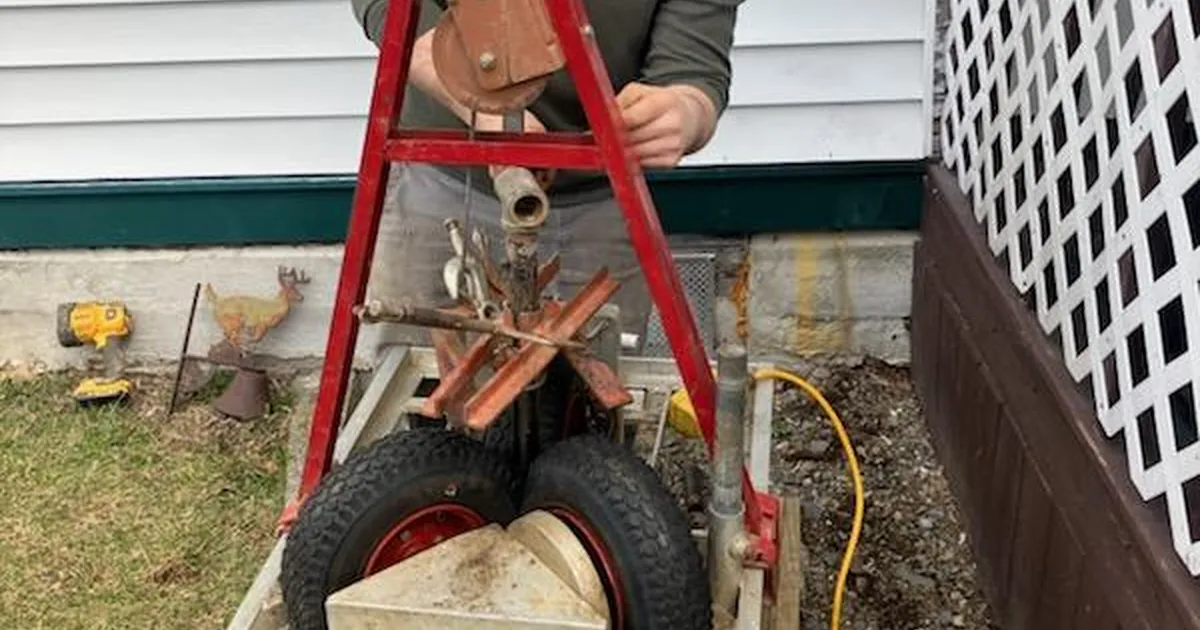
Clearing a main line is a job for the right equipment. The photo above shows one of our sectional drain machines set up outside a home. Here is how a typical main line call goes:
- Locate the main cleanout, usually in the basement or just outside the foundation.
- Run a heavy drain cable with a cutting head through the line to open the blockage and cut roots.
- For grease, scale or heavy roots, follow up with hydro jetting, which scours the full diameter of the pipe with high pressure water.
- Run a camera through the line to see what caused the clog, whether roots, a break, a sag or buildup.
- Talk through the findings and the options, from maintenance cleaning to spot repair or replacement.
The camera step is the one we never want to skip on a repeat problem. A clog that comes back every few months is almost always a symptom of something physical in the pipe, and the camera shows exactly where it is.
What You Should Not Do
A few common DIY attempts can make a main line problem worse or create new ones:
- Avoid pouring chemical drain cleaner into a main line backup. It rarely reaches the clog, it can damage older pipes, and it is dangerous for anyone who has to open the line afterwards.
- Do not rent a heavy drain machine without experience. The cable can kink, break or get stuck in the line, and the rotating cable can cause serious hand injuries.
- Do not keep running water to see if the clog clears on its own.
Preventing the Next Backup
Once the line is clear, a few habits go a long way:
- Only flush toilet paper. Put wipes, paper towels and hygiene products in the trash.
- Collect cooking grease in a can instead of pouring it down the sink.
- If roots were the cause, schedule a maintenance cleaning every year or two before they grow back.
- Know where your main cleanout is and keep it accessible.
For homes with ongoing root problems or aging pipe, our sewer services include inspection, repair and full line replacement with options that minimize digging.
If you have water coming up in the basement right now, call (607) 373-6421. We provide 24/7 emergency service in Sherburne, Hamilton, Earlville and the surrounding towns.
Frequently Asked Questions
How do I know if my main sewer line is clogged?
The clearest signs are several slow drains at once, water backing up into a basement floor drain or shower when other fixtures are used, and toilets that gurgle when the washer drains.
Can a plunger fix a main sewer line clog?
No. A plunger can clear a clog in a single fixture, but a main line blockage is too far down the system. It needs a heavy drain cable or hydro jetting from the main cleanout.
Why does my sewer line keep clogging?
Repeat clogs usually point to a physical problem such as tree roots, a cracked or offset joint, or a sag in the line. A camera inspection shows the cause so it can be repaired instead of cleared again and again.
Is a sewer backup an emergency?
Yes. Sewage in the home is a health hazard and can damage floors, walls and belongings quickly. Stop using water and call a plumber right away.
Mike Ezzo
Owner and Lead Plumber, EZ-CO Plumbing
Mike and the EZ-CO team handle residential plumbing, well systems, water heaters and heating across Sherburne, Hamilton, Earlville and the surrounding towns in Chenango and Madison County. The guidance in this article comes from the jobs we do every week. Read what customers say on our reviews page.
Related services
Keep Reading
Signs You Need Professional Drain Cleaning
Slow drains, gurgling sounds and foul odors are all signs your drains need professional attention. Here is what to look for.
Adding a Basement Bathroom: What the Plumbing Rough-In Involves
A basement bathroom adds real value, but the plumbing under the floor decides whether it works for decades or backs up in a year. Here is what the rough-in actually involves.
Well Pressure Tank Replacement in Central New York: Signs Your Tank Is Failing
A clicking pump and pressure that rises and falls at the faucet usually point to one part: the pressure tank. Here is how to spot a failing tank and what a proper replacement includes.