Well Pressure Tank Replacement in Central New York: Signs Your Tank Is Failing
The short answer
A well pressure tank stores water under air pressure so your pump does not start every time a faucet opens. When the internal bladder fails or the tank loses its air charge, the pump short cycles, pressure swings at the tap, and the pump motor wears out years early. Replacing the tank with a correctly sized and correctly precharged unit protects the pump and brings back steady water pressure.
If your home in Sherburne, Hamilton, Earlville or anywhere in the surrounding towns runs on a private well, the pressure tank in your basement is doing quiet but important work every day. It is also one of the most common reasons we get called out to well systems in Chenango and Madison County.
The good news is that a failing pressure tank gives plenty of warning before it takes the pump down with it. This guide walks through how the tank works, the signs that it is on its way out, a simple check you can do yourself, and what a professional replacement actually involves.
In this article
- How a Well Pressure Tank Works
- Warning Signs Your Pressure Tank Is Failing
- A Simple Pressure Tank Check You Can Do at Home
- What a Proper Replacement Looks Like
- Choosing the Right Size Pressure Tank
- What Affects the Cost of Pressure Tank Replacement
- How Long Should a Well Pressure Tank Last?
- Frequently asked questions
How a Well Pressure Tank Works
Inside most modern pressure tanks is a rubber bladder or diaphragm that separates water from a pocket of compressed air. When your well pump runs, it pushes water into the tank and squeezes that air pocket. When you open a faucet, the compressed air pushes water back out into the house without the pump needing to start.
A pressure switch mounted near the tank watches the system pressure. It turns the pump on at a low setting called the cut-in pressure and turns it off at a high setting called the cut-out pressure. The two most common settings in homes around here are 30/50 and 40/60 psi.
The amount of water the tank can deliver between those two points is called the drawdown. A healthy tank with good drawdown lets the pump rest between cycles, and that rest is what keeps the pump motor and the pressure switch contacts alive for a long time.
Warning Signs Your Pressure Tank Is Failing
Pressure tanks rarely fail all at once. These are the signs we see most often, roughly in the order homeowners notice them:
- The pump clicks on and off rapidly. This is called short cycling. You may hear the pressure switch clicking every few seconds while a faucet is running.
- Pressure pulses at the faucet or shower. The flow surges and drops instead of staying steady.
- Water comes out of the air valve. The valve on top or on the side of the tank should only release air. Water means the bladder has ruptured.
- The tank sounds full when you tap it. A healthy tank sounds hollow near the top. A waterlogged tank sounds solid all the way up.
- Rust, sweating or leaks at the bottom seams. Steel tanks corrode from the outside in damp basements and from the inside once the bladder fails.
- Higher electric bills with no other explanation. A pump that starts dozens of extra times a day uses more power and wears faster.
Short cycling is the one to take seriously. Every start puts a surge of heat and current through the pump motor. A pump that should last well over a decade can fail in a few seasons if the tank behind it is waterlogged. That is why we treat a failing tank as a way to protect the more expensive part of the system, the pump in your well pump services setup.
A Simple Pressure Tank Check You Can Do at Home
You can confirm most tank problems with a standard tire pressure gauge and about fifteen minutes. Here is the process we walk homeowners through on the phone:
- Turn off the power to the well pump at the breaker or the disconnect switch.
- Open a faucet or the drain valve near the tank and let the system drain until the pressure gauge reads zero.
- Remove the cap from the air valve on the tank and check the air pressure with the tire gauge.
- Compare that reading to your pressure switch. The air charge should sit about 2 psi below the cut-in pressure, so roughly 28 psi for a 30/50 switch or 38 psi for a 40/60 switch.
- Press the valve stem briefly. If water or a wet mist comes out instead of dry air, the bladder has failed.
If the air charge is simply low and the valve releases only dry air, recharging the tank to the correct pressure may solve the problem. If the charge keeps dropping every few weeks, the tank is leaking air and replacement is the long term fix.
What a Proper Replacement Looks Like
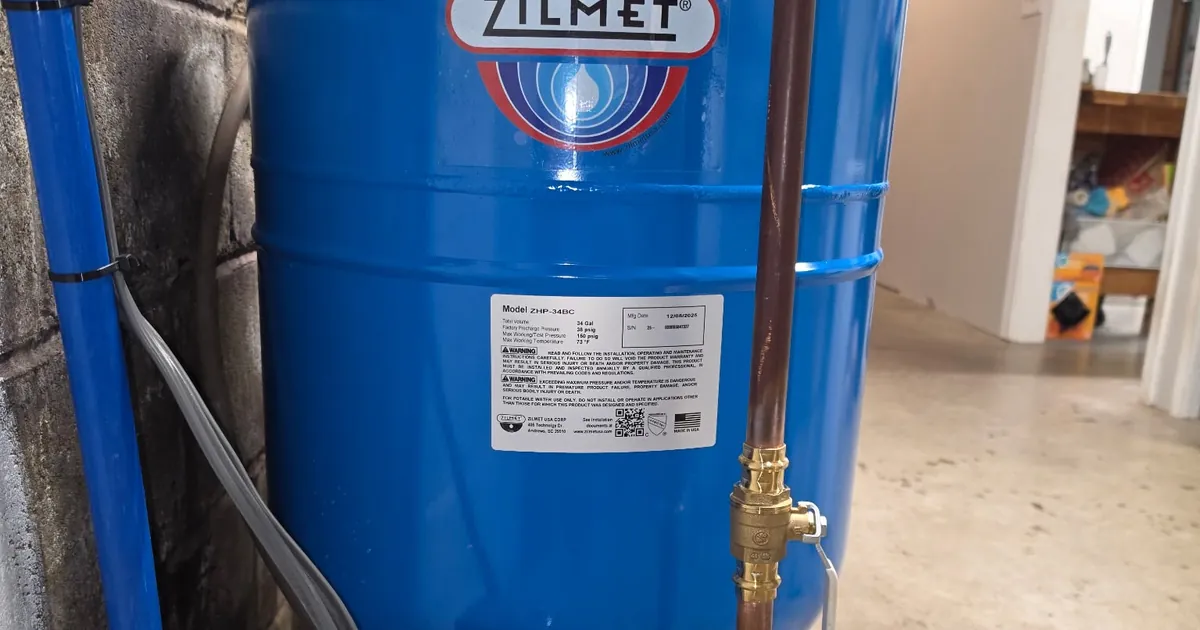
The photo at the top of this article is from one of our recent pressure tank replacements in a basement near Sherburne. The new tank is a Zilmet vertical unit that ships with a factory precharge of 38 psi, which is the correct match for a 40/60 pressure switch. We still check the precharge with a gauge before we fill any tank, because shipping and storage can change it.
A good replacement is more than swapping one tank for another. On a job like this one we typically:
- Confirm the pump is healthy before blaming everything on the tank.
- Install a new tank tee with a working pressure gauge, a drain valve and a pressure relief valve.
- Replace the pressure switch if the contacts are pitted or burned from short cycling.
- Add a full port shutoff valve so the tank can be isolated in the future without shutting down the whole house.
- Set the tank on a solid, level base off the damp floor to slow corrosion on the bottom seam.
- Test the full cycle, confirm cut-in and cut-out pressures, and time the pump run so we know it is resting properly between starts.
You can see more of our well and water system work in the project gallery.
Choosing the Right Size Pressure Tank
Bigger is not automatically better, but undersized tanks are one of the most common problems we find in older homes. The goal is to give the pump a long enough run time on each cycle. Most pump manufacturers want the motor to run at least a minute or two every time it starts.
To size a tank correctly we look at:
- The flow rate of your pump in gallons per minute.
- Your pressure switch settings, since drawdown changes with pressure.
- How many people live in the home and how water is used during peak times.
- Whether you have irrigation, a water softener backwash, or livestock waterers that pull steady flow.
- The space available in your basement or pump room.
A properly sized tank often means the pump starts far less often each day, and that difference shows up years later in pump life.
What Affects the Cost of Pressure Tank Replacement
Every well system is a little different, so we quote each job after we see it. The main things that change the price are:
- Tank size and brand.
- Whether the pressure switch, tank tee, gauge and valves also need replacing.
- Access. A tank in an open basement is quicker than one in a tight crawl space or a well pit.
- The condition of the existing piping, especially old galvanized fittings that may crack when disturbed.
- Whether the pump itself has already been damaged by short cycling.
We give you a clear price before any work starts. If you are unsure whether the tank is the real problem, a diagnostic visit usually answers that question in under an hour.
How Long Should a Well Pressure Tank Last?
A quality bladder tank commonly lasts somewhere between ten and fifteen years, sometimes longer. Tanks in damp basements, tanks that have been short cycling for a long time, and tanks on wells with sediment or aggressive water often fail sooner.
Checking the air charge once a year is the single best thing you can do to get the full life out of your tank. If you would rather not do it yourself, it is part of our service contracts, along with a look at the pump, pressure switch and filters.
If your pump is clicking right now or you have no water at all, call us at (607) 373-6421. We offer 24/7 emergency service across Sherburne, Hamilton and Earlville.
Frequently Asked Questions
How do I know if my well pressure tank is waterlogged?
Tap the tank from top to bottom. A healthy tank sounds hollow near the top. A waterlogged tank sounds solid all the way up. Rapid pump cycling and water coming out of the air valve are the other two clear signs.
What should the air pressure be in my well pressure tank?
With the pump off and the water drained to zero, the air charge should be about 2 psi below the cut-in pressure of your switch. That is about 28 psi for a 30/50 switch and about 38 psi for a 40/60 switch.
Can a bad pressure tank damage my well pump?
Yes. A failed tank causes the pump to start and stop far more often than it should. Each start adds heat and wear to the motor, which can shorten the life of the pump by years.
Do you replace pressure tanks in Hamilton and Earlville?
Yes. EZ-CO Plumbing replaces well pressure tanks, pressure switches and well pumps for homes in Sherburne, Hamilton, Earlville and the surrounding towns in Chenango and Madison County.
Mike Ezzo
Owner and Lead Plumber, EZ-CO Plumbing
Mike and the EZ-CO team handle residential plumbing, well systems, water heaters and heating across Sherburne, Hamilton, Earlville and the surrounding towns in Chenango and Madison County. The guidance in this article comes from the jobs we do every week. Read what customers say on our reviews page.
Related services
Keep Reading
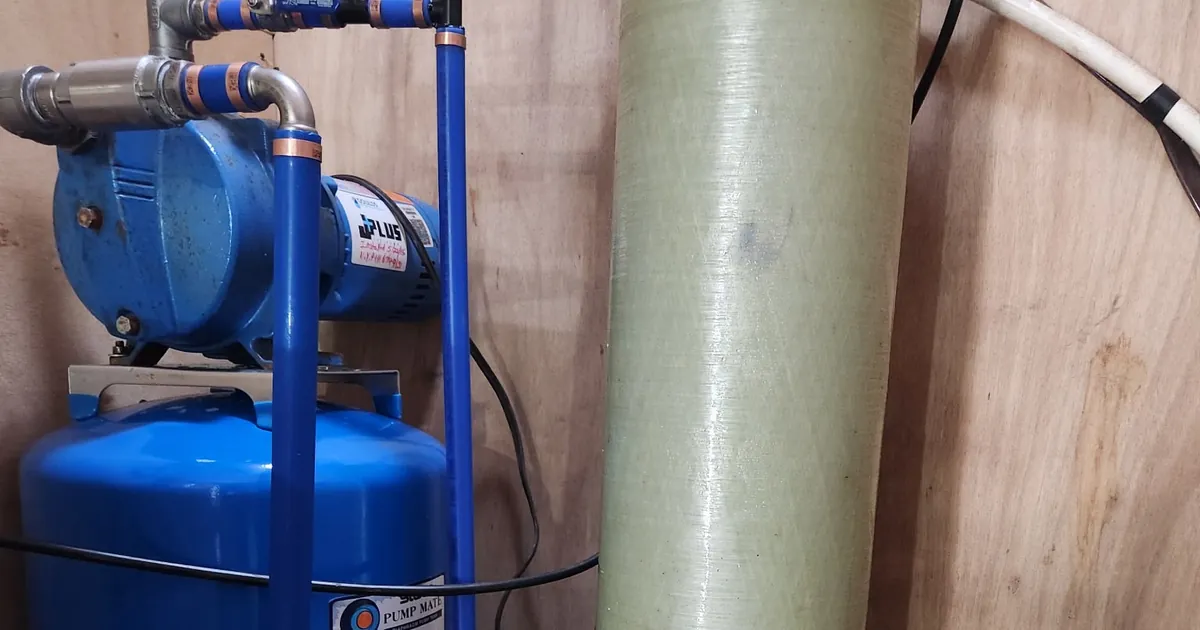
Jet Pump vs Submersible Well Pump: Which Fits Your Central NY Home?
Most homes on a private well in our area use one of two pump types. Knowing which one you have, and how it works, makes it much easier to diagnose problems and plan a replacement.
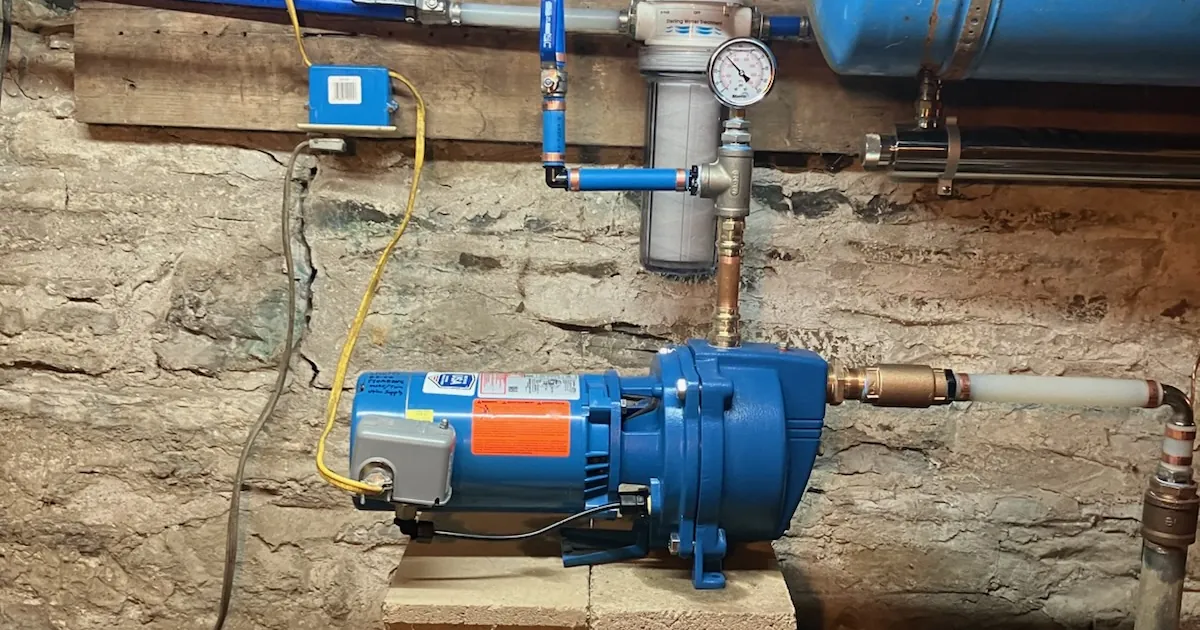
Low Water Pressure on a Private Well: Causes and Fixes for Central NY Homes
Weak showers and slow filling toilets on a well usually come down to a short list of causes. Most can be narrowed down in a few minutes by reading one gauge in your basement.
Emergency Plumbing Tips Every Homeowner Should Know
When a plumbing emergency strikes, knowing what to do in the first few minutes can prevent costly damage to your home.