Jet Pump vs Submersible Well Pump: Which Fits Your Central NY Home?
The short answer
A jet pump sits above ground, usually in the basement, and pulls water up from the well by suction. It works best on shallow wells and springs and is easy to service. A submersible pump sits down in the well and pushes water up. It handles deeper wells, runs quieter and is usually more efficient, but it has to be pulled out of the well for service. The right choice depends mainly on the depth to water in your well.
Private wells are the norm once you leave the village centers of Sherburne, Hamilton and Earlville. When a customer calls us with no water, low pressure or a pump that will not shut off, one of the first things we want to know is which type of pump they have.
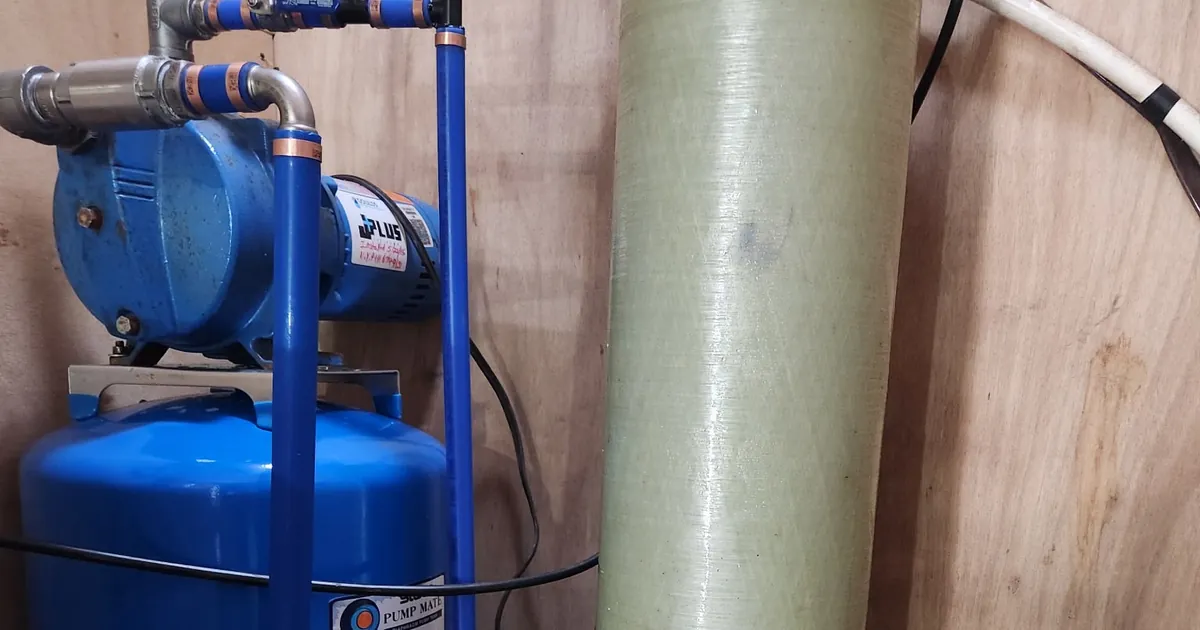
The photo above shows a classic basement jet pump sitting on top of its pressure tank, next to a water treatment tank. Many older farmhouses and homes fed by springs in our area still run on a setup just like this one. Here is how it compares to a submersible pump.
In this article
How to Tell Which Pump You Have
Go to wherever your water line enters the house, usually the basement or a utility room.
- If you see a pump with an electric motor sitting on the floor, on a shelf, or mounted on top of the pressure tank, you have a jet pump.
- If you see only a pressure tank, a pressure switch and a small control box on the wall, your pump is a submersible down in the well. The control box is a common sign of a three wire submersible.
Some homes with a spring or shallow dug well use a jet pump, while drilled wells in our area more often use submersibles.
How Jet Pumps Work
A jet pump uses an impeller to push water through a narrow nozzle called a jet, which creates suction that pulls more water up from the well. Because it relies on suction, a jet pump is limited by physics in how far it can lift water.
- Shallow well jet pumps work when the water level is within about 25 feet of the pump.
- Deep well jet pumps use a second pipe and an ejector down in the well to reach deeper, but they lose efficiency the deeper they go.
Jet pump advantages
- Easy to reach for service since the pump is in the basement.
- Lower cost for shallow wells, springs and cisterns.
- Simple to diagnose and repair.
Jet pump drawbacks
- Noisier, since the motor runs inside the house.
- Must stay primed. A leak in the suction line lets air in and the pump loses prime.
- Less efficient on deeper water levels.
How Submersible Pumps Work
A submersible pump is a long, narrow pump and motor that hangs down inside the well casing, below the water level. Instead of pulling water up, it pushes water up to the house through the drop pipe.
Submersible pump advantages
- Works on deep drilled wells that jet pumps cannot handle efficiently.
- Quiet, since the pump is underground.
- Never needs priming because it sits in the water.
- Generally more efficient at moving water from depth.
Submersible pump drawbacks
- Repairs mean pulling the pump, pipe and wire out of the well, which takes equipment and experience.
- Higher upfront cost than a shallow well jet pump.
Jet Pump vs Submersible at a Glance
- Best for: Jet pumps suit shallow wells, springs and cisterns. Submersibles suit deeper drilled wells.
- Location: Jet pumps sit above ground. Submersibles sit inside the well.
- Noise: Jet pumps are audible in the house. Submersibles are nearly silent.
- Priming: Jet pumps need to stay primed. Submersibles do not.
- Service access: Jet pumps are easy to reach. Submersibles must be pulled.
- Lifespan: Both commonly give many years of service when paired with a correctly sized, healthy pressure tank.
That last point matters more than the pump type. A waterlogged pressure tank makes any pump short cycle and wear out early. Our guide on well pressure tank replacement explains how to check yours.
Common Problems We See With Each Type
Jet pumps
- Loss of prime from a leaking foot valve or suction line.
- Worn impellers or jets clogged with sediment or iron.
- Leaking shaft seals that drip water under the motor.
- Pressure switches with clogged ports.
Submersible pumps
- Failed start capacitors or relays in the control box on three wire pumps.
- Worn pumps that no longer build full pressure.
- Damaged wire splices or broken drop pipe down in the well.
- Pumps running dry when the water level drops in a late summer dry spell.
Low pressure is one of the most common complaints with both types, and it is not always the pump. Our article on low well water pressure walks through the other likely causes.
Should You Replace a Jet Pump With a Submersible?
Not always. If your jet pump serves a shallow well or spring and has worked reliably, replacing it with a new jet pump is often the simplest and most economical option.
Switching to a submersible makes sense when the water level is too deep for a jet pump to work efficiently, when the pump keeps losing prime, or when the noise of a basement pump is a real problem. The well itself needs to be suitable for a submersible, which we check before recommending the change.
EZ-CO Plumbing installs and repairs both jet pumps and submersible pumps. We have customers who tell us the water pressure after a pump repair is better than it has been in years, and you can read their experiences on our reviews page.
Learn more about our well pump services or call (607) 373-6421. If you have no water at all, we offer 24/7 emergency service in Sherburne, Hamilton, Earlville and nearby towns.
Frequently Asked Questions
How deep can a jet pump pull water?
A shallow well jet pump works when the water level is within about 25 feet of the pump. Deep well jet pumps use an ejector in the well to reach deeper, but they become less efficient as depth increases.
Which lasts longer, a jet pump or a submersible pump?
Both can give many years of service. The biggest factor in pump life is usually the pressure tank. A waterlogged or undersized tank causes short cycling, which wears out any pump early.
Why does my jet pump keep losing prime?
The most common causes are a leaking foot valve or check valve, an air leak in the suction line, or a water level that has dropped below what the pump can lift.
How do I know if my submersible well pump is failing?
Warning signs include low or falling water pressure, the pump running constantly, sputtering faucets, a tripped breaker, or no water at all. A plumber can test the pump electrically before pulling it from the well.
Mike Ezzo
Owner and Lead Plumber, EZ-CO Plumbing
Mike and the EZ-CO team handle residential plumbing, well systems, water heaters and heating across Sherburne, Hamilton, Earlville and the surrounding towns in Chenango and Madison County. The guidance in this article comes from the jobs we do every week. Read what customers say on our reviews page.
Related services
Keep Reading
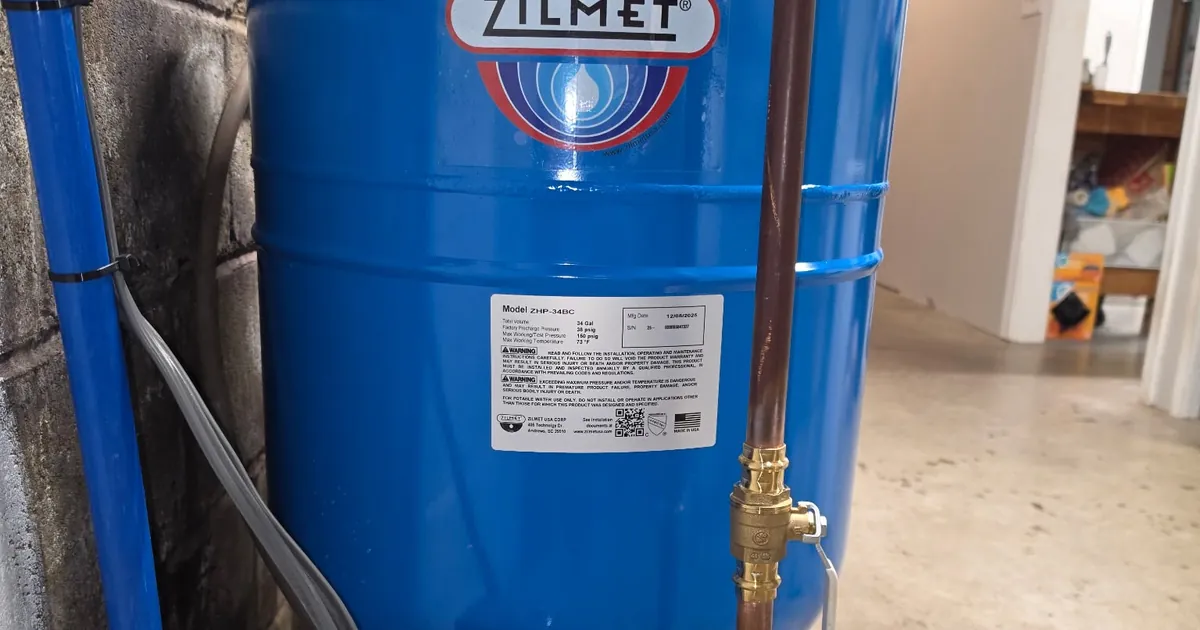
Well Pressure Tank Replacement in Central New York: Signs Your Tank Is Failing
A clicking pump and pressure that rises and falls at the faucet usually point to one part: the pressure tank. Here is how to spot a failing tank and what a proper replacement includes.
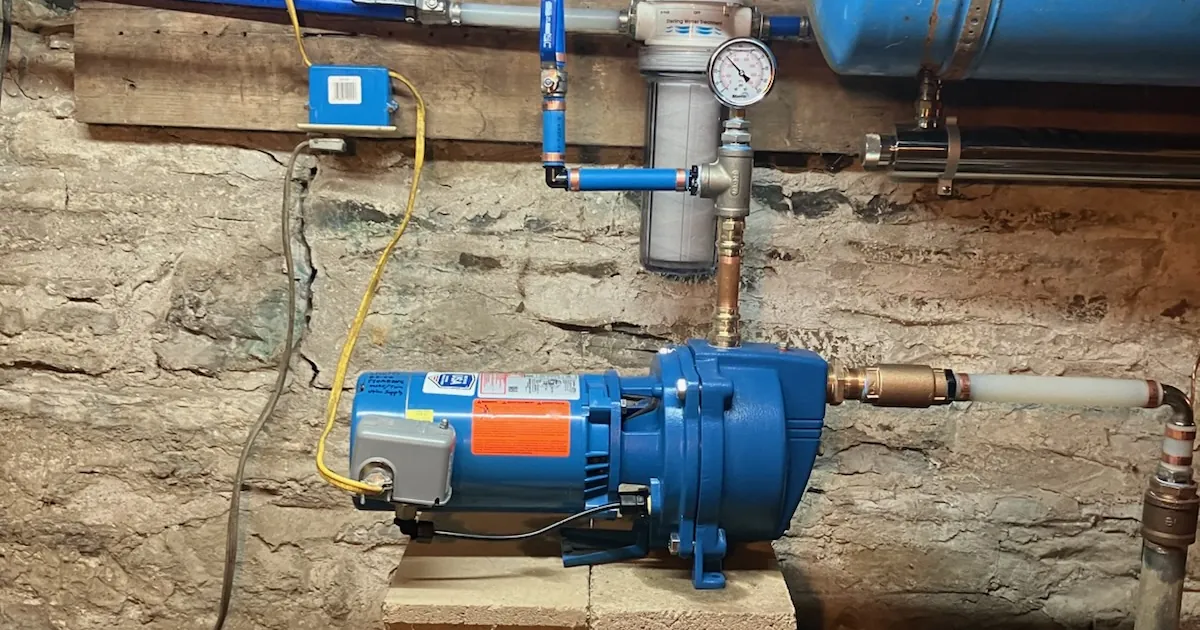
Low Water Pressure on a Private Well: Causes and Fixes for Central NY Homes
Weak showers and slow filling toilets on a well usually come down to a short list of causes. Most can be narrowed down in a few minutes by reading one gauge in your basement.
Hard Water and Iron in Well Water: Treatment Options for Central NY Homes
Orange stains in the tub, white crust on faucets and water that tastes like metal are common on private wells in our area. Here is how to test for the cause and choose the right treatment.