Hard Water and Iron in Well Water: Treatment Options for Central NY Homes
The short answer
Hardness comes from dissolved calcium and magnesium and causes scale on fixtures and inside water heaters. Iron causes orange or brown stains and a metallic taste. The right fix depends on a water test. A water softener removes hardness and small amounts of dissolved iron. Higher iron levels usually need a dedicated iron filter ahead of the softener, and a sediment filter protects everything downstream.
If your home outside the villages of Sherburne, Hamilton or Earlville runs on a private well, there is a good chance you have seen at least one of these: rust colored stains in the toilet, white crust on the shower head, spotty dishes, or water that tastes a little like pennies.
These are some of the most common water quality complaints we hear, and they are almost always fixable. The key is testing first, then choosing equipment that matches what is actually in your water rather than buying a system that treats the wrong problem.
In this article
- What Hard Water Is and How It Shows Up
- Iron in Well Water: Stains, Taste and Clogged Fixtures
- Test Before You Treat
- Treatment Options That Actually Work
- Two Related Problems: Manganese and Rotten Egg Smell
- Why Treatment Protects Your Plumbing, Not Just Your Laundry
- Getting the Right System for Your Well
- Frequently asked questions
What Hard Water Is and How It Shows Up
Hard water carries dissolved calcium and magnesium picked up as groundwater moves through rock. It is safe to drink, but it is hard on plumbing and appliances. Common signs include:
- White or chalky crust on faucets, shower heads and glass shower doors.
- Spotty dishes and glassware even after running the dishwasher.
- Soap and shampoo that do not lather well.
- Dry skin and stiff laundry.
- Scale buildup inside the water heater, which you may hear as popping or rumbling.
Hardness is measured in grains per gallon. Water above about 7 grains per gallon is generally considered hard, and many wells in central New York test well above that.
Iron in Well Water: Stains, Taste and Clogged Fixtures
Iron is one of the most common minerals in private well water. Even small amounts leave their mark:
- Orange, red or brown stains in sinks, tubs, toilets and laundry.
- A metallic taste in drinking water, coffee and tea.
- Water that comes out clear but turns orange after sitting in a glass.
- Slimy orange buildup in toilet tanks, which is a sign of iron bacteria.
- Clogged aerators, shower heads and filters.
The U.S. Environmental Protection Agency lists iron as a secondary contaminant and suggests a level of 0.3 milligrams per liter as the point where staining and taste problems usually begin. You can read more on the EPA's page on secondary drinking water standards.
Test Before You Treat
Treatment equipment is sized and chosen based on numbers, so a proper water test is the first step. A useful test for a well with staining or scale should include:
- Hardness in grains per gallon.
- Iron and manganese.
- pH, since acidic water can corrode copper pipe and affects which treatment works.
- Total dissolved solids.
- Bacteria, including total coliform and E. coli.
The bacteria test matters even if your water looks and tastes fine. The EPA recommends private well owners test for bacteria regularly, and you can find more guidance on its private wells page.
Treatment Options That Actually Work
Sediment filter
A whole house sediment filter catches sand, grit and loose particles before they reach your fixtures and other treatment equipment. It is inexpensive, and it is often the first piece we install on any well system.
Water softener
A softener uses resin beads to exchange calcium and magnesium for sodium or potassium. It solves hardness completely and can remove small amounts of dissolved iron. Modern softeners regenerate based on actual water use, which saves salt and water.
Iron filter
When iron levels are higher than a softener can handle, a dedicated iron filter goes in ahead of the softener. Common types use air injection or a special filter media to change dissolved iron into particles and trap them. Getting iron out first protects the softener resin and keeps it working for years.
UV disinfection
If a test shows bacteria, an ultraviolet system can disinfect water as it passes through without adding chemicals. UV works best when installed after sediment and iron treatment, since cloudy or stained water blocks the light.
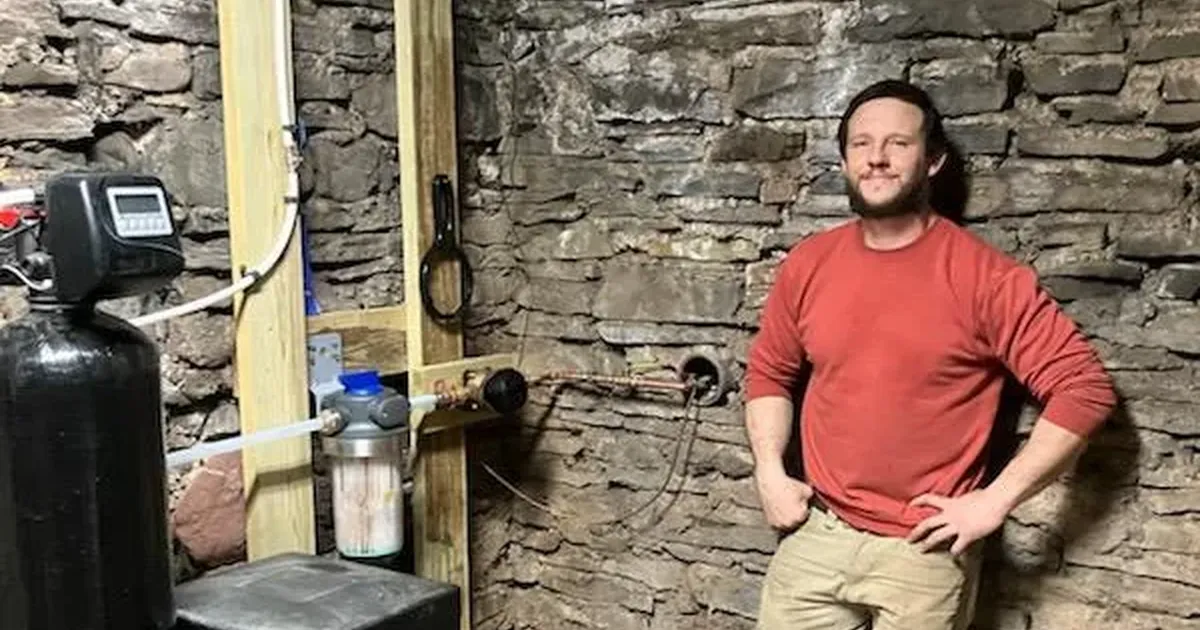
The photo at the top of this article shows a typical setup we install on wells in our area: a sediment filter on the incoming line followed by a softener, set up in an older home with a fieldstone foundation. More examples are in our project gallery.
Two Related Problems: Manganese and Rotten Egg Smell
Iron often travels with two other common well water complaints, and a good treatment plan accounts for all three.
- Manganese leaves black or dark brown stains in toilets and laundry and can give water a bitter taste. Many iron filters remove manganese too, but it needs to be on the water test so the equipment is sized for it.
- Hydrogen sulfide gives water a rotten egg smell. If the smell is only in the hot water, the cause is often the water heater anode rod reacting with the water, and a different anode can fix it. If both hot and cold water smell, the gas is in the well water itself and an air injection or oxidizing filter is usually the answer.
Knowing which of these you have is another reason we always start with a test. Treating iron alone when manganese or sulfur is also present leaves you with a system that only solves part of the problem.
Why Treatment Protects Your Plumbing, Not Just Your Laundry
Scale and iron do more than make a mess. Scale coats the inside of water heaters and shortens their life, which is one of the signs your water heater needs replacing early. Iron and sediment clog pressure switch ports and wear out pumps. Both build up inside tankless water heaters and fixture valves.
Treating the water at the point where it enters the house protects every fixture and appliance downstream. It is also why we test water before recommending a tankless heater on any well.
Getting the Right System for Your Well
EZ-CO Plumbing installs and services sediment filters, water softeners, iron filters and UV systems for homes throughout Sherburne, Hamilton, Earlville and the surrounding towns. We look at your test results, your water use and your available space, then recommend only the equipment you need.
Learn more about our water filtration services, or call (607) 373-6421 to talk through your water problems.
Frequently Asked Questions
Will a water softener remove iron from well water?
A softener can remove small amounts of dissolved iron. Higher levels, or iron that has already turned into particles, need a dedicated iron filter installed ahead of the softener to protect the resin.
Is iron in well water harmful?
Iron is generally considered a nuisance rather than a health risk at the levels found in most wells. It causes staining, taste problems and clogged fixtures. The EPA suggests 0.3 milligrams per liter as the level where those problems usually start.
How often should I test my well water?
Test for bacteria regularly, commonly once a year, and any time the taste, smell or color of your water changes. A full mineral test is worth doing before installing treatment equipment.
Where does the water softener go in a well system?
It is installed after the pressure tank and after any sediment and iron filters, and before the water heater, so both hot and cold water are treated.
Mike Ezzo
Owner and Lead Plumber, EZ-CO Plumbing
Mike and the EZ-CO team handle residential plumbing, well systems, water heaters and heating across Sherburne, Hamilton, Earlville and the surrounding towns in Chenango and Madison County. The guidance in this article comes from the jobs we do every week. Read what customers say on our reviews page.
Related services
Keep Reading
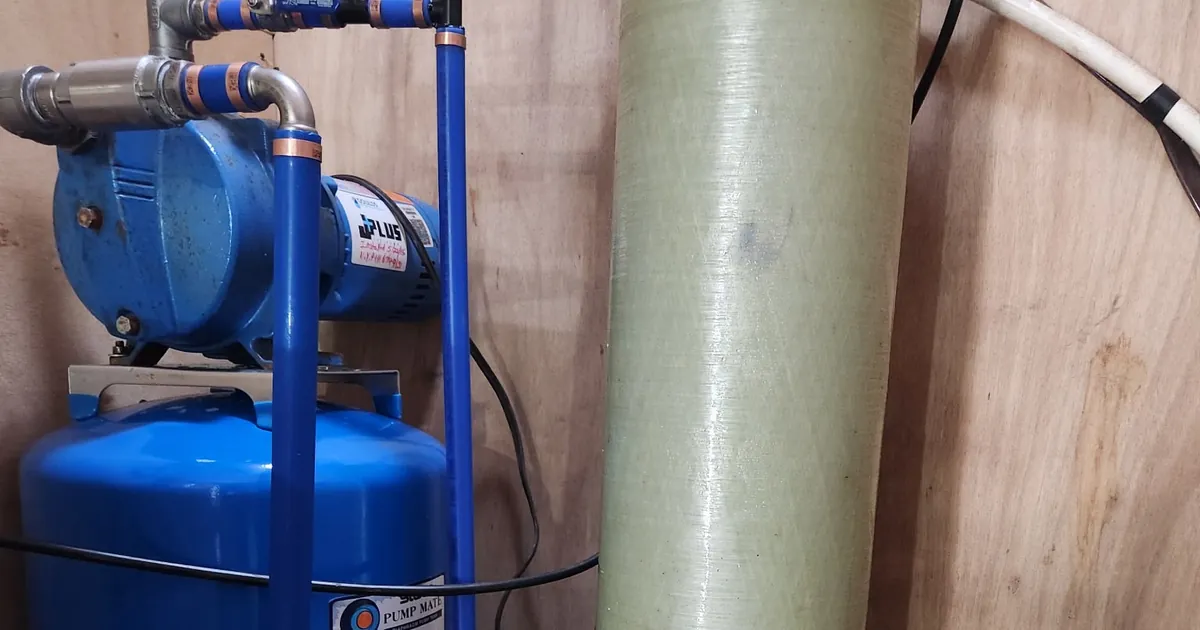
Jet Pump vs Submersible Well Pump: Which Fits Your Central NY Home?
Most homes on a private well in our area use one of two pump types. Knowing which one you have, and how it works, makes it much easier to diagnose problems and plan a replacement.
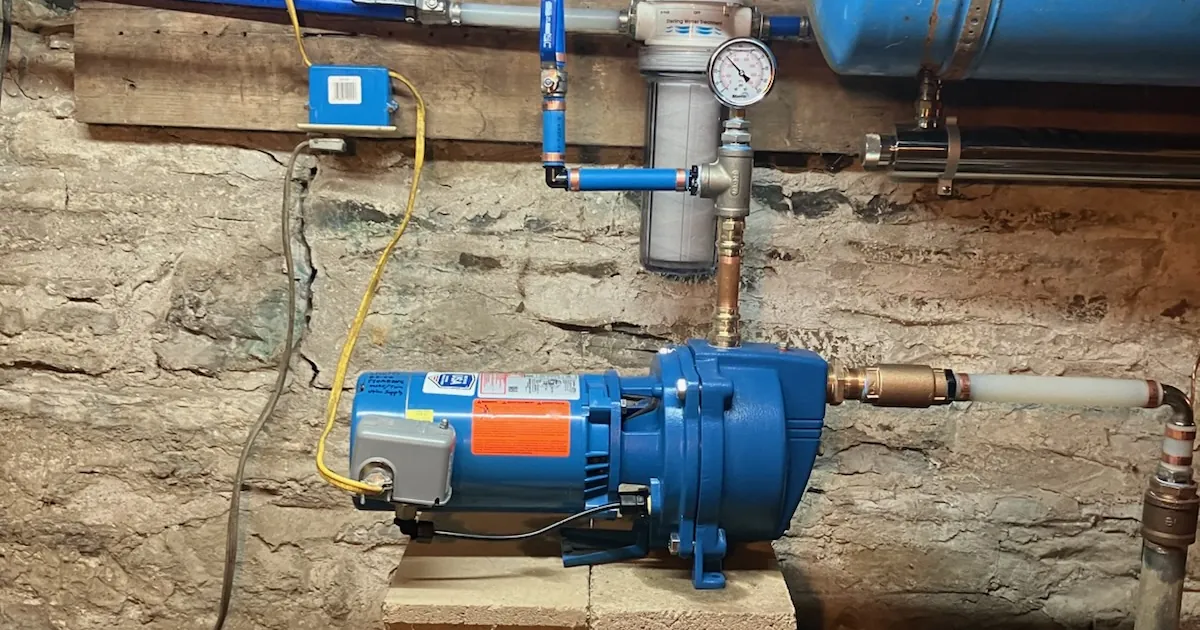
Low Water Pressure on a Private Well: Causes and Fixes for Central NY Homes
Weak showers and slow filling toilets on a well usually come down to a short list of causes. Most can be narrowed down in a few minutes by reading one gauge in your basement.
Emergency Plumbing Tips Every Homeowner Should Know
When a plumbing emergency strikes, knowing what to do in the first few minutes can prevent costly damage to your home.