7 Signs Your Water Heater Needs Replacing Before a Central NY Winter
The short answer
The clearest signs a water heater needs replacing are age over about ten years, rusty hot water, water pooling at the base of the tank, rumbling or popping noises, hot water that runs out faster than it used to, and a relief valve that keeps leaking. Replacing a failing tank in early fall avoids a no hot water emergency during the coldest months, when the heater is under the most strain.
In central New York, groundwater and village water both get noticeably colder through the winter. That means your water heater has to raise the temperature of every gallon further than it does in summer, and it runs longer to do it. An old tank that limped through the warm months is often the one that quits in January.
Replacing a water heater on your schedule in early fall is far easier than replacing one on an emergency call with water on the basement floor. Here are the seven signs we look for, starting with the one most people never check.
In this article
- 1. The Tank Is More Than 10 Years Old
- 2. Rusty or Discolored Hot Water
- 3. Water Around the Base of the Tank
- 4. Rumbling, Popping or Banging Noises
- 5. You Run Out of Hot Water Faster
- 6. The Relief Valve Keeps Dripping
- 7. Repairs Are Adding Up
- Choosing a Replacement Water Heater
- Replace It Now, Not on the Coldest Night of the Year
- Frequently asked questions
1. The Tank Is More Than 10 Years Old
Most standard tank water heaters last roughly 8 to 12 years. Hard water, sediment and high usage can shorten that. Your heater's age is printed in the serial number on the label. Many manufacturers encode the month and year in the first few characters, and a quick search of the brand plus serial number format will tell you how to read it.
If your heater is past the ten year mark and showing any of the other signs below, it is usually smarter to replace it than to repair it.
2. Rusty or Discolored Hot Water
If only your hot water comes out brown or orange, the inside of the tank may be rusting. That usually means the anode rod, the part designed to corrode instead of the tank, is used up.
One caution for homes on private wells: iron in the water supply can cause orange stains on both hot and cold. If your cold water is discolored too, the cause is more likely the well. Our guide to hard water and iron in well water explains how to tell the difference.
3. Water Around the Base of the Tank
Moisture or a small puddle under the heater is one of the most urgent signs. Check first whether the water is coming from a fitting on top or from the relief valve discharge pipe, since those can often be repaired. If the water is coming from the tank itself, the tank has failed and will not get better.
4. Rumbling, Popping or Banging Noises
Over time, minerals settle to the bottom of the tank and form a layer of sediment. Water trapped under that layer boils as the burner or element heats it, which makes a popping or rumbling sound. Sediment makes the heater less efficient and overheats the bottom of the tank, which speeds up failure.
Flushing the tank once a year prevents most of this. If the noise is loud and the tank is older, flushing may stir up more sediment than it removes, and replacement is often the better call.
5. You Run Out of Hot Water Faster
If showers that used to last are now going cold halfway through, sediment may be taking up space in the tank, a heating element may have failed on an electric unit, or the dip tube may be broken.
Sometimes the heater is fine and the household has simply outgrown it. If that is the case, a larger tank or a second heater may be the answer. We explain that option in our article on two water heaters piped in parallel.
6. The Relief Valve Keeps Dripping
The temperature and pressure relief valve is a safety device that opens if the tank gets too hot or the pressure climbs too high. An occasional drip after years of service may just mean a worn valve. Frequent discharge can point to the thermostat set too high, a failed thermal expansion tank, or high incoming water pressure. Never cap or plug a relief valve.
7. Repairs Are Adding Up
Replacing an element, a thermostat or a gas control on a newer heater is a reasonable repair. Paying for a second or third repair on a tank that is already ten years old usually is not. A simple rule we share with customers: if the repair would cost a large share of what a new heater costs and the tank is near the end of its expected life, put the money toward the replacement.
Choosing a Replacement Water Heater
A replacement is a chance to choose the right heater instead of simply matching the old one. The main options are:
- Standard tank, electric or gas. Reliable, simple and the lowest upfront cost.
- Heat pump water heater. Much more efficient than a standard electric tank but needs space and a basement that stays reasonably warm.
- Tankless. Endless hot water and a small footprint, but it needs proper gas or electrical capacity, and on hard well water it needs regular descaling.
- Two tanks in parallel. Extra capacity plus backup for large households.
ENERGY STAR has a helpful overview of efficient water heater types. We walk through these options at your home and explain the tradeoffs in plain terms.
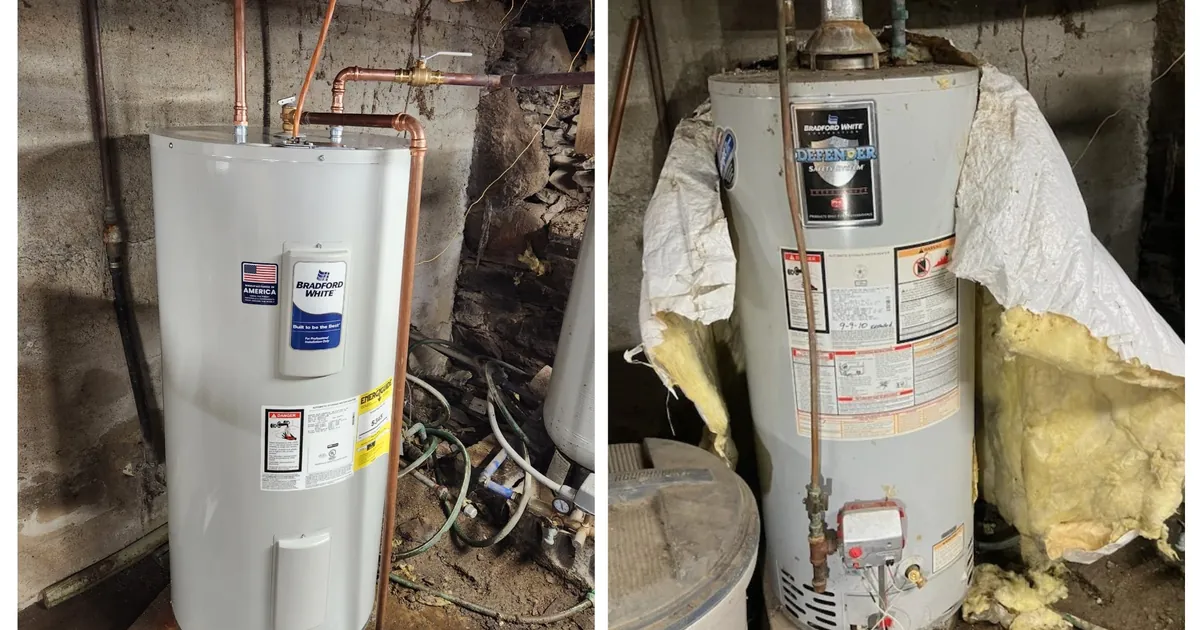
The photo above is a before and after from a recent replacement: the old insulated gas tank on the right and the new Bradford White electric tank that replaced it on the left, with fresh copper connections.
Replace It Now, Not on the Coldest Night of the Year
If your heater shows two or more of these signs, early fall is the ideal time to replace it. Parts and units are easier to get, scheduling is flexible, and you avoid the risk of a flooded basement and cold showers in the middle of winter.
EZ-CO Plumbing offers water heater installation with old unit disposal included, along with water heater repair and maintenance for all major brands. Call (607) 373-6421 to schedule a visit in Sherburne, Hamilton, Earlville or the surrounding towns.
Frequently Asked Questions
How long does a water heater last?
A standard tank water heater typically lasts about 8 to 12 years. Hard water, sediment buildup and heavy use can shorten that, while annual flushing and anode rod replacement can extend it.
Is it worth repairing a 10 year old water heater?
Usually not if the repair is expensive or the tank is leaking. Small repairs like a thermostat or element can make sense, but a tank near the end of its life is often better replaced.
Why is my hot water rusty but my cold water is clear?
Rust in the hot water only usually means the tank is corroding inside because the anode rod is used up. If both hot and cold water are discolored, the cause is more likely iron in the water supply.
How quickly can you replace a water heater?
EZ-CO Plumbing offers same day water heater installation when the right unit is available. Call (607) 373-6421 for service in Sherburne, Hamilton and Earlville.
Mike Ezzo
Owner and Lead Plumber, EZ-CO Plumbing
Mike and the EZ-CO team handle residential plumbing, well systems, water heaters and heating across Sherburne, Hamilton, Earlville and the surrounding towns in Chenango and Madison County. The guidance in this article comes from the jobs we do every week. Read what customers say on our reviews page.
Related services
Keep Reading
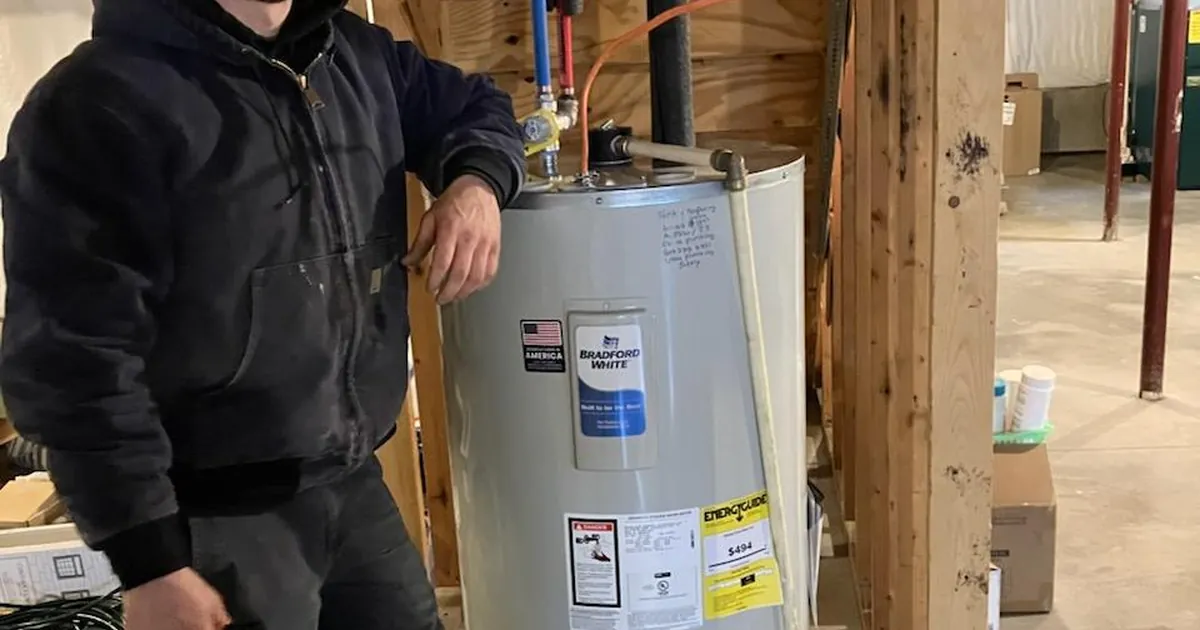
How to Maintain Your Water Heater: A Homeowner's Guide for Central NY
Regular maintenance extends the life of your water heater and saves you money. Learn the essential steps every homeowner should know.
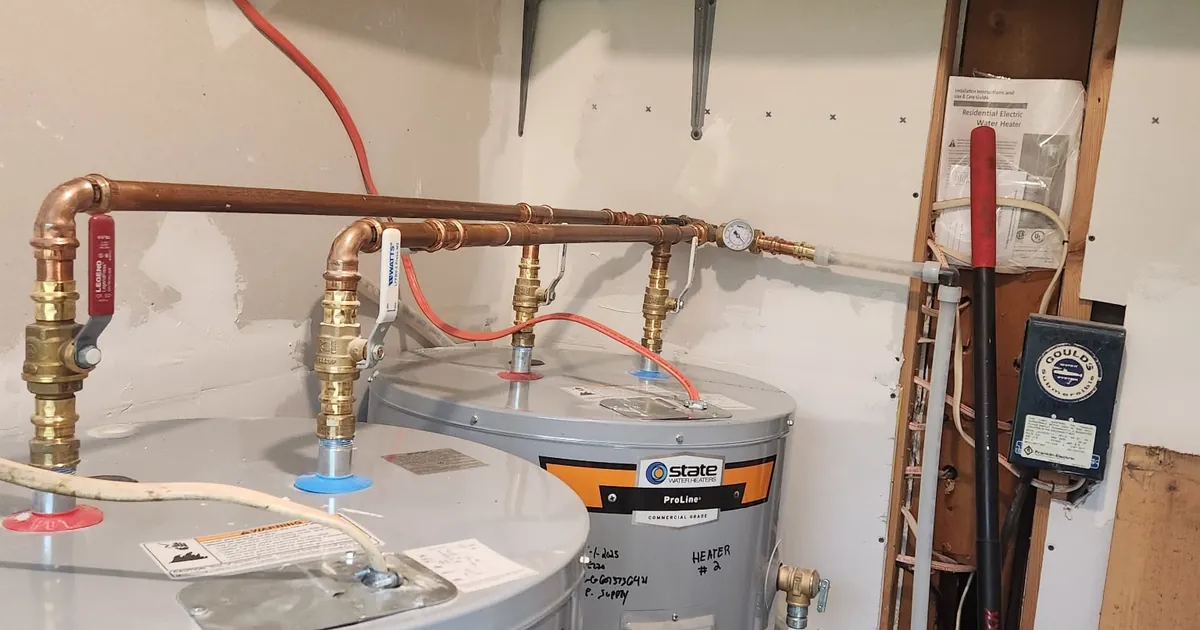
Two Water Heaters in Parallel: More Hot Water for Busy Central NY Homes
When one tank cannot keep up, a second heater piped in parallel can double your hot water and give you a backup if one unit fails. Here is how it works and when it makes sense.
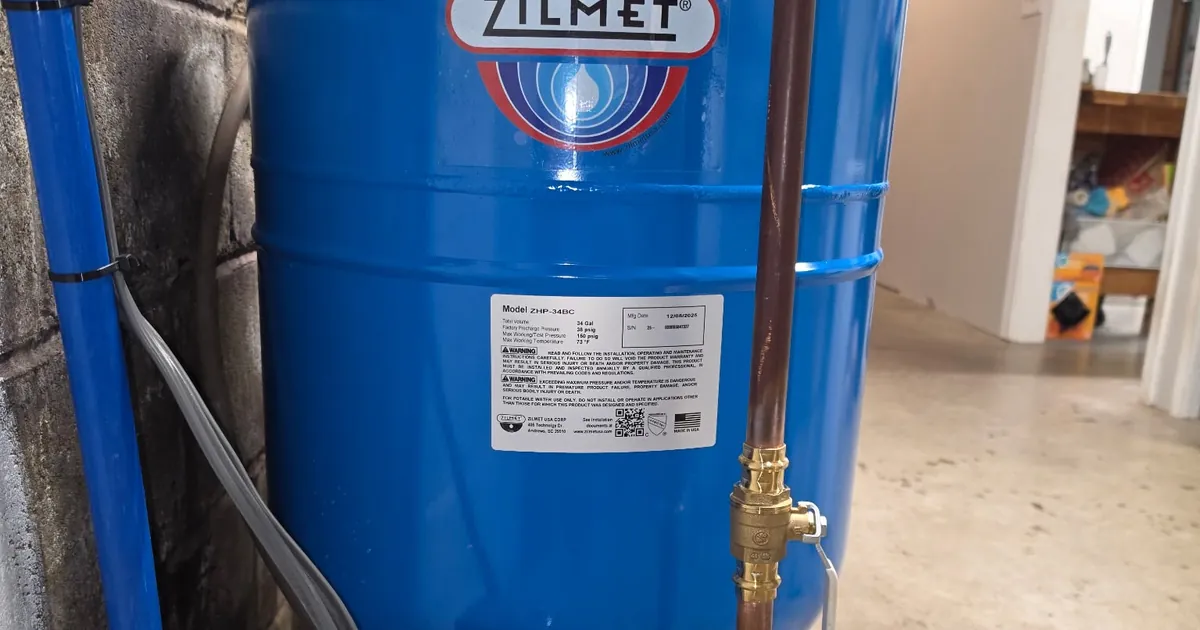
Well Pressure Tank Replacement in Central New York: Signs Your Tank Is Failing
A clicking pump and pressure that rises and falls at the faucet usually point to one part: the pressure tank. Here is how to spot a failing tank and what a proper replacement includes.