Two Water Heaters in Parallel: More Hot Water for Busy Central NY Homes
The short answer
Piping two water heaters in parallel means cold water feeds both tanks at the same time and both tanks feed the house together. It roughly doubles the hot water available at peak times and lets one heater keep running while the other is serviced. The key to a good install is balanced piping so both tanks share the load evenly, plus isolation valves and a separate relief valve on each tank.
A single 40 or 50 gallon tank works for plenty of households. It stops working the moment you add teenagers, a large soaking tub, a second bathroom or a couple of guests over the holidays. The result is the same complaint we hear across Sherburne, Hamilton and Earlville: the last person in the shower gets a cold one.
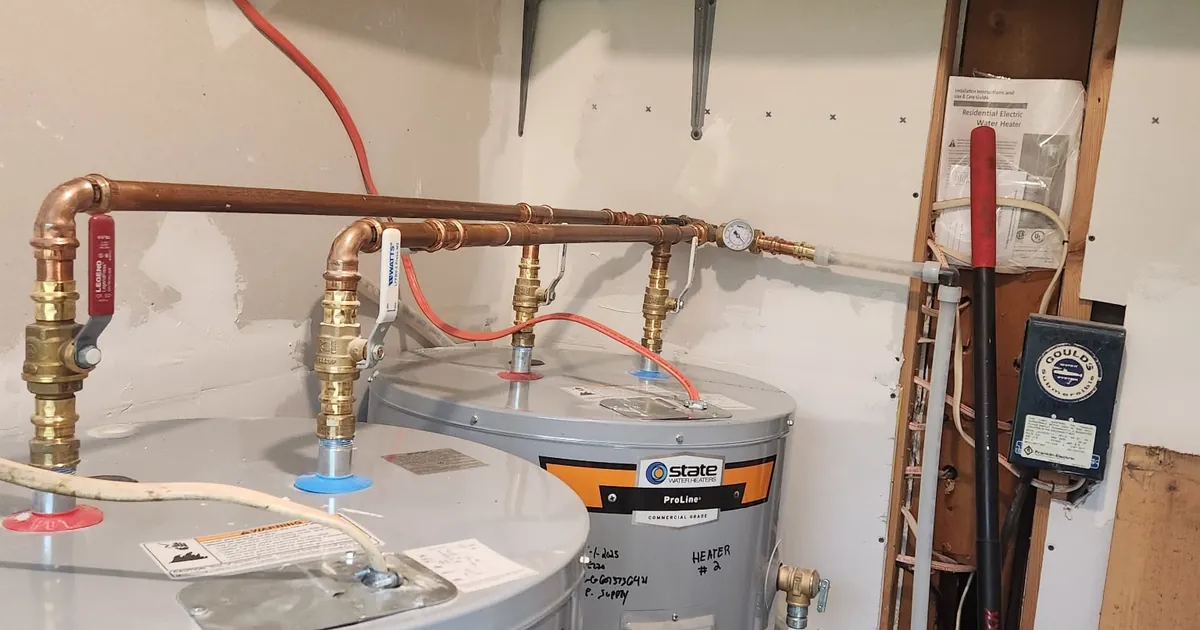
One of the cleanest solutions is a second water heater piped in parallel with the first. The photo above is from a recent install where we set two State ProLine electric heaters side by side in a tight utility closet. This article explains why we chose that approach and how to know if it fits your home.
In this article
Parallel vs Series: What Is the Difference?
There are two ways to connect two tank water heaters. The difference matters more than most people expect.
- Series: Cold water enters the first tank, and the warm water from that tank feeds the second tank. The second tank does most of the work while the first acts as a preheater.
- Parallel: Cold water splits and feeds both tanks at the same time. Both tanks deliver hot water to the house together, so you get the combined capacity of both units.
For most homes that simply need more hot water at peak times, parallel is the better choice. It spreads the work evenly, it doubles the available flow of hot water, and if one heater needs service the other can keep the house supplied.
Why Balanced Piping Is the Whole Job
Water always takes the path of least resistance. If one heater sits closer to the supply line or has fewer fittings in its path, it will do most of the work while the other barely runs. That tank wears out first and your real capacity is far lower than two full tanks.
The fix is to pipe both heaters so the water travels the same distance and passes through the same number of fittings on the way in and on the way out. Plumbers often call this a reverse return or balanced manifold. In the photo you can see the copper headers running across the top of both tanks with matching connections on each one.
What We Include on a Parallel Water Heater Install
On the job pictured, and on most parallel installs we do, the system includes:
- Balanced copper supply and return headers joined with press fittings for clean, leak free connections.
- A full port isolation ball valve on each heater, so either tank can be shut off, drained or replaced while the other stays in service.
- A pressure gauge on the manifold so system pressure is easy to read at a glance.
- A separate temperature and pressure relief valve on each heater, each with its own discharge line.
- Each tank labeled with the install date and our contact number, so the next person who works on it knows the history.
- Correct wiring or gas supply for each unit, sized to handle both heaters running at the same time.
This home was also on a private well, which you can spot from the submersible pump control box on the wall. We made sure the well system could supply the combined flow before recommending two tanks. You can see this job and others in our project gallery.
When Two Heaters Make More Sense Than One Big Tank
An 80 gallon heater or a tankless unit can also solve a hot water shortage. Two tanks in parallel tend to be the better fit when:
- There is not enough height or floor space for a single large tank, but there is room for two standard units.
- The electrical service can support two standard elements more easily than one large specialty unit.
- You want backup hot water so a single failure does not leave the house with none.
- The household uses a lot of hot water in short bursts, like several showers back to back every morning.
- You want to add capacity without replacing a heater that still has years of life left.
Tankless units can be a great choice for some homes, but on wells with hard water or iron they need regular descaling, and very cold incoming winter water in central New York reduces how much flow they can heat at once. We walk through all of these options on our water heaters visits before recommending one.
Maintaining a Two Tank System
Two heaters means twice the tanks to look after, but the routine is simple:
- Flush a few gallons from the drain of each tank once a year to remove sediment. Well water in our area tends to leave more sediment than village water.
- Test each relief valve once a year by lifting the lever briefly and making sure it reseats.
- Check the anode rods every few years and replace them when they are heavily worn.
- Keep both thermostats at the same setting so the tanks share the load evenly. Around 120 degrees is a common setting that balances comfort, safety and energy use.
Our full guide on how to maintain your water heater walks through each of these steps. ENERGY STAR also has helpful background on efficient water heaters.
Is a Second Water Heater Right for Your Home?
If your family runs out of hot water most mornings, we can look at your current heater, your electrical or gas supply, your well capacity and the space you have, then recommend the simplest fix. Sometimes that is a second tank in parallel. Sometimes it is a single larger unit or a repair to the heater you already have.
Call (607) 373-6421 or request service online. We install and repair water heaters for homes throughout Sherburne, Hamilton, Earlville and the surrounding towns. You can also read more about our water heater installation process.
Frequently Asked Questions
Can you connect two water heaters together?
Yes. Two tank water heaters can be connected in series or in parallel. Parallel piping, where both tanks are fed cold water at the same time, doubles the hot water available at peak times and is the most common choice for large households.
Is it better to have two water heaters or one large one?
It depends on space, electrical or gas capacity and how your household uses hot water. Two tanks give you backup if one fails and can fit where a single large tank will not. One large tank has fewer parts to maintain.
Why does one of my two water heaters wear out faster?
Usually the piping is not balanced, so water favors one tank and it does most of the work. Rebalancing the supply and return piping lets both tanks share the load evenly.
Do both water heaters need their own relief valve?
Yes. Every water heater needs its own temperature and pressure relief valve with a proper discharge line, even when two heaters share the same piping.
Mike Ezzo
Owner and Lead Plumber, EZ-CO Plumbing
Mike and the EZ-CO team handle residential plumbing, well systems, water heaters and heating across Sherburne, Hamilton, Earlville and the surrounding towns in Chenango and Madison County. The guidance in this article comes from the jobs we do every week. Read what customers say on our reviews page.
Related services
Keep Reading
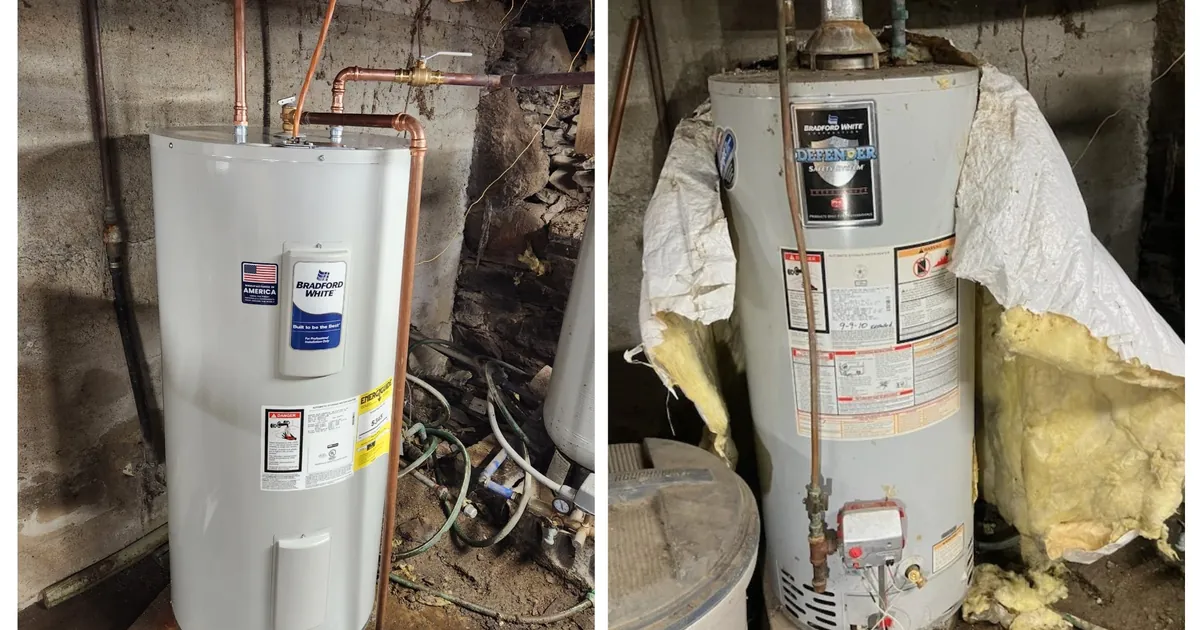
7 Signs Your Water Heater Needs Replacing Before a Central NY Winter
Water heaters work hardest in winter, when the water coming in is at its coldest. These seven signs tell you whether your tank will make it through the season or should be replaced now.
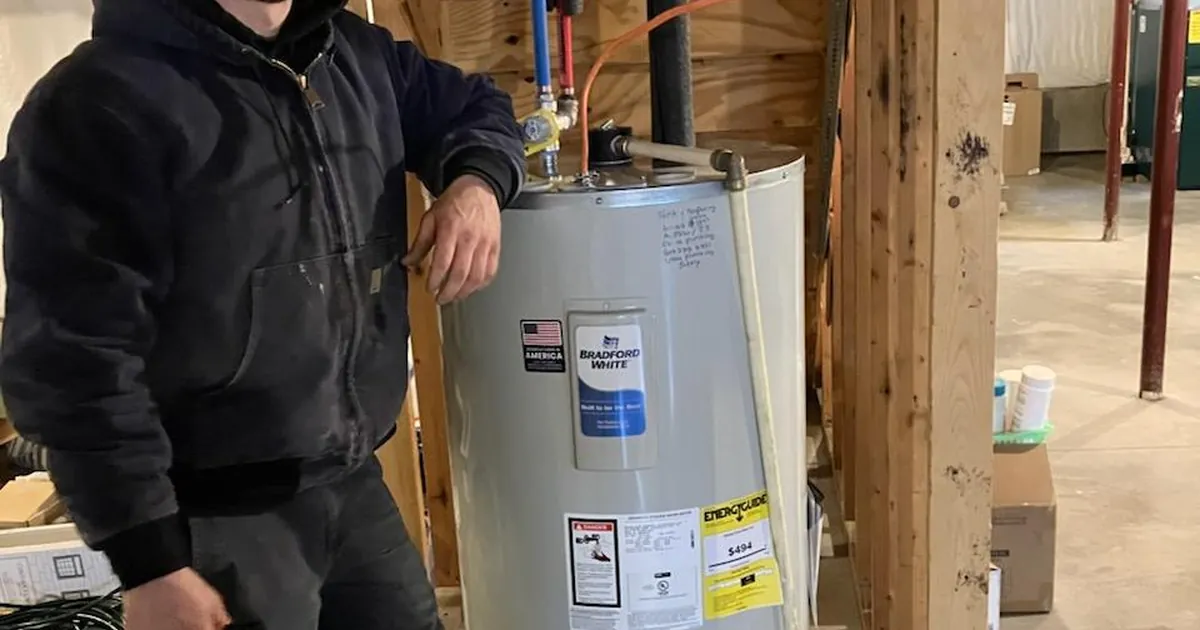
How to Maintain Your Water Heater: A Homeowner's Guide for Central NY
Regular maintenance extends the life of your water heater and saves you money. Learn the essential steps every homeowner should know.
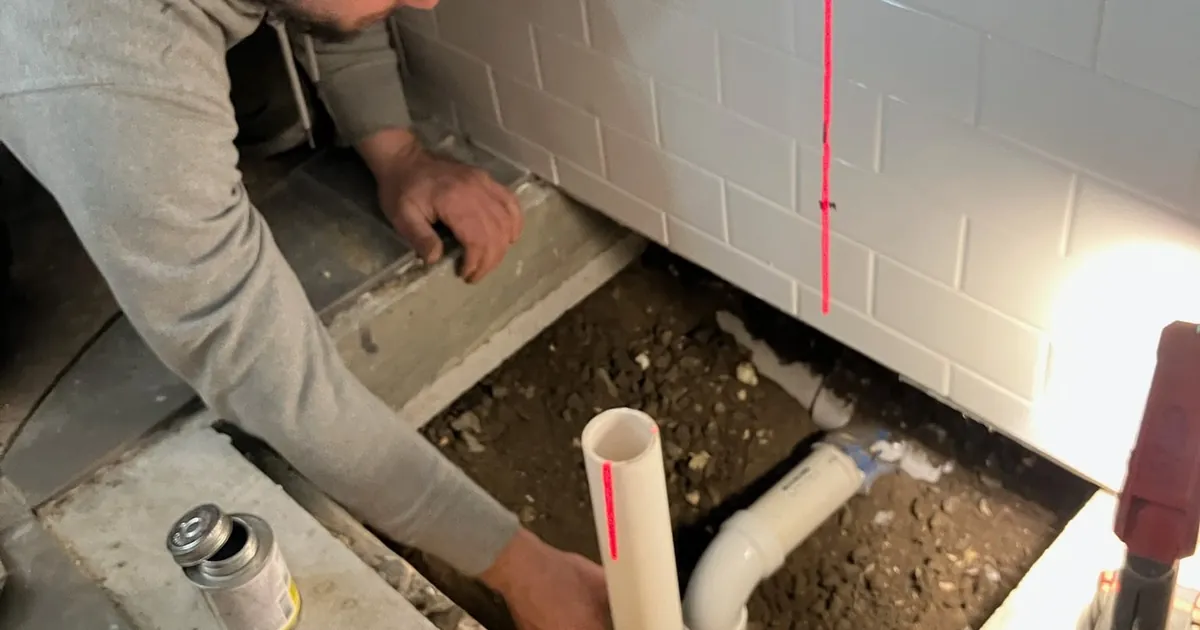
Adding a Basement Bathroom: What the Plumbing Rough-In Involves
A basement bathroom adds real value, but the plumbing under the floor decides whether it works for decades or backs up in a year. Here is what the rough-in actually involves.